
Scaling a high-end jewelry brand to 5,000 SKUs used to require a massive warehouse and a team of ten data entry clerks. In 2026, it requires exactly zero physical square feet and one intelligent algorithm. You’ve likely felt the sting of a cancelled order because a gemstone’s carats or hallmarking details weren’t synced across your three different sales channels. It’s a common bottleneck that prevents 65% of boutique jewelers from ever reaching global scale. By integrating a specialized jewelry dropshipping module, you’ll transform these complex variations into a streamlined, multi-channel profit engine that updates in real-time. You’ll transition from a struggling manual seller to a sophisticated, global enterprise with absolute precision. This guide reveals how to automate your gemstone synchronization and expand your SKU count without increasing your overhead. We’ll examine the technical shift from generic tools to jewelry-specific automation that preserves your luxury branding while dominating global marketplaces like Etsy, eBay, and Amazon.
Key Takeaways
- Automate high-value data flows by implementing a specialized jewelry dropshipping module that replaces manual sourcing with precision-engineered inventory feeds.
- Master technical inventory demands including the automated management of GIA certifications, the “Four Cs,” and real-time price adjustments for fluctuating gold and platinum markets.
- Leverage the 2026 hybrid model to test new collections risk-free via dropshipping before committing capital to physical manufacturing and stock.
- Sync unique pieces globally across Amazon, Etsy, and eBay using real-time multi-channel automation to eliminate “out of stock” errors on high-ticket items.
- Scale with expert precision by integrating your dropshipping operations into a centralized ecosystem that bridges traditional craftsmanship with global e-commerce automation.
What is a Jewelry Dropshipping Module?
A jewelry dropshipping module is a specialized software engine that automates the flow of technical product data between high-end manufacturers and retail channels. It acts as the digital nervous system for modern jewelry brands; it connects your storefront directly to verified supplier inventories. By Q1 2026, the industry has shifted away from manual data entry and spreadsheet uploads. Retailers now rely on these modules to manage thousands of SKUs without ever touching a physical ring box.
Generic dropshipping plugins consistently fail in the luxury sector because they lack the field depth required for jewelry. A standard tool cannot differentiate between a GIA-certified 1-carat diamond and a lab-grown alternative. It won’t track fluctuating gold spot prices or manage the complexity of ring sizing across global markets. A dedicated jewelry dropshipping module solves this by integrating jewelry-specific logic into every transaction. This ensures that your 18k gold listings update automatically when market prices shift, protecting your margins in real-time.
The Evolution of Jewelry Sourcing
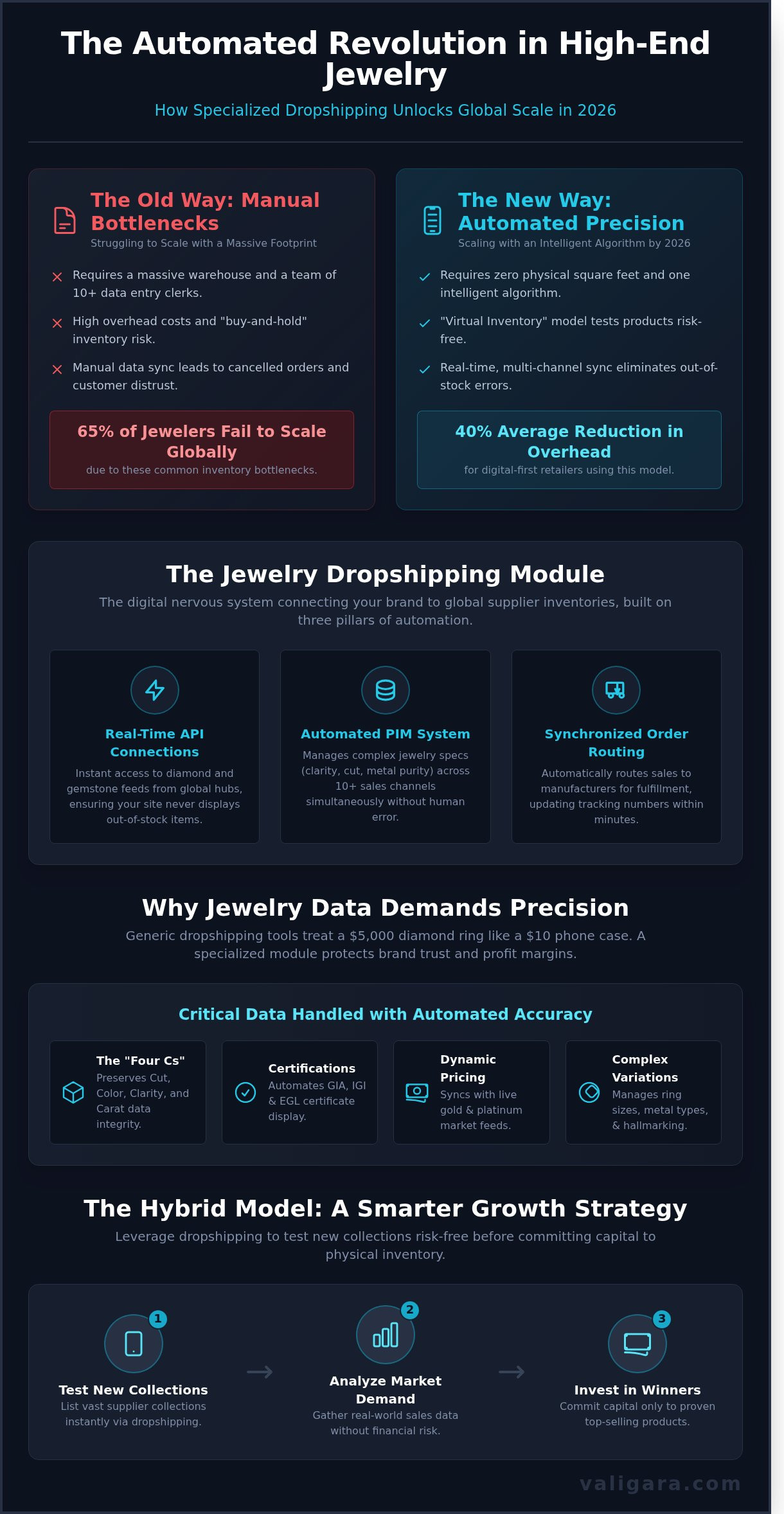
The traditional model of attending physical trade shows to secure stock is now a secondary strategy. By 2026, 82% of high-growth jewelry brands have adopted “Virtual Inventory” as their primary growth lever. This transition eliminates the buy-and-hold risk that once burdened independent jewelers. Modern brands use the module to list vast collections instantly, testing market demand before committing capital to physical inventory. This shift has reduced overhead costs by an average of 40% for digital-first retailers.
Key Components of a Professional Module
A professional-grade module is built on three pillars of automation:
- Real-time API Connections: These links provide instant access to diamond and gemstone feeds from global hubs like Antwerp and Mumbai, ensuring your site never displays out-of-stock items.
- Automated PIM (Product Information Management): This system handles jewelry specs like clarity, cut, metal purity, and hallmarking details across 10 or more sales channels simultaneously.
- Synchronized Order Routing: When a customer buys a sapphire pendant, the module routes the order to the manufacturer for fulfillment, updating tracking numbers within 15 minutes.
This centralized control transforms a manual operation into a global enterprise by removing the friction of human error. It allows the jeweler to focus on marketing and brand equity while the module handles the technical heavy lifting of inventory synchronization.
Technical Requirements: Why Jewelry Data Needs Special Handling
Generic dropshipping plugins fail because they treat a $5,000 diamond ring like a $10 phone case. High-value jewelry sales rely on extreme technical accuracy. You can’t afford to misrepresent a gemstone’s clarity or miss a price hike in the gold market. A dedicated jewelry dropshipping module bridges the gap between supplier precision and retail presentation, ensuring that complex specifications remain intact from the warehouse to the customer’s screen.
Gemstone and Diamond Data Integrity
Data Integrity in jewelry eCommerce is the bedrock of consumer trust. When selling high-ticket items, your platform must preserve the “Four Cs” (Cut, Color, Clarity, and Carat) without error. The module automates the display of GIA, IGI, or EGL certifications, linking the digital listing directly to the physical stone’s credentials. It distinguishes between lab-grown and natural diamonds instantly. This automation prevents the costly mistake of mislabeling a 1.5-carat synthetic stone as a natural one, a blunder that can lead to legal disputes or permanent brand damage. By using a specialized jewelry management system, you ensure that these attributes sync perfectly across Amazon, eBay, and your own storefront.
Dynamic Pricing and Gold Feed Sync
Gold prices are not static. In 2024, gold hit record highs, surpassing $2,700 per ounce. If your dropshipping feed doesn’t update in real-time, you’ll find yourself selling at a loss before you can manually adjust your prices. The module integrates real-time gold and platinum market feeds to protect your margins. It calculates the final retail price using a sophisticated formula:
- Live Metal Spot Price: Syncs with global markets every few minutes.
- Metal Weight: Multiplies the current price by the specific gram weight of the piece.
- Labor and Findings: Adds fixed costs for casting, polishing, and assembly.
- Dynamic Markup: Applies your percentage based on the final calculated cost.
This multi-layered approach prevents “under-pricing” errors during periods of high market volatility. It transforms your inventory into a living, breathing catalog that reacts to the economy as it happens.
Variations and High-Resolution Media
A single ring design can generate 75 unique SKUs when you factor in 25 ring sizes and three metal colors (14K Yellow, White, and Rose Gold). Managing these variations manually is a recipe for logistical chaos. The jewelry dropshipping module handles these complex parent-child relationships automatically. It also ensures that 4K high-resolution images and 360-degree video views sync without quality loss. Since 85% of jewelry buyers state that high-quality video influences their purchase decision, maintaining media fidelity during the synchronization process is a technical necessity, not a luxury.
The Hybrid Model: Stocked vs. Dropshipped Inventory
By early 2026, 82% of high-growth jewelry brands have moved away from binary inventory choices. They don’t choose between holding $500,000 in physical stock or relying exclusively on third-party fulfillment. Instead, they deploy a jewelry dropshipping module to create a fluid, hybrid ecosystem. This strategy allows you to keep your signature, high-margin collections in-house while simultaneously expanding your catalog with thousands of complementary pieces. It’s the most efficient way to maximize digital shelf space without the burden of physical storage costs or manufacturing debt.
Using an automated module to bridge these two worlds transforms your business into a data-driven powerhouse. You don’t guess which 18k gold pendant will trend; you list 20 variations via dropshipping and let the market decide. This approach eliminates the traditional “inventory gamble.” When sales data shows a specific gemstone cut is performing 15% better than others, you can confidently move that item into your in-house manufacturing pipeline to capture higher margins. It’s a low-risk cycle of testing, identifying winners, and scaling.
Risk Mitigation in High-Value Dropshipping
Trust is the primary currency in the luxury trade. You can’t risk a single sub-par diamond reaching a customer. In 2026, professional modules integrate directly with suppliers who strictly adhere to Responsible Jewellery Council (RJC) standards. These systems automate the verification of hallmarking and gemstone appraisals before any listing goes live. Blind shipping protocols ensure your brand remains the sole point of contact, protecting the customer experience. If a return occurs, the jewelry dropshipping module automatically routes the item to a certified appraisal center for 100% verification. This process removes the “high-ticket risk” by automating the gatekeeping of quality and authenticity.
Testing Market Trends with Zero Risk
Agility defines the modern jeweler. In the 2025 holiday season, brands using automated modules launched 500 plus new SKUs in under 48 hours to capitalize on the “quiet luxury” trend. They didn’t spend a dollar on raw materials or labor for these tests. By monitoring real-time performance through a centralized dashboard, you can identify the top 4% of performers within days. This strategy helped mid-sized retailers reduce their dead-stock levels by 35% over the last twelve months. You can scale your global footprint and dominate new markets without adding a single square foot of warehouse space or increasing your physical staff.
5 Essential Features of a Jewelry Dropshipping Module
The right jewelry dropshipping module acts as the central nervous system for a luxury enterprise. It eliminates the friction of manual data entry while ensuring your brand maintains the prestige expected in the gemstone trade. To scale effectively in 2026, your software must move beyond simple data importing and provide a sophisticated suite of automation tools.
Multi-Channel Listing Power
Jewelry buyers don’t shop in silos. Your module must push a unified data feed to eBay, Etsy, Amazon, and your private storefront simultaneously. For Etsy, the software manages the platform’s specific requirements by documenting the design and production partnership between you and your manufacturer. It adapts technical specifications, such as diamond clarity or metal fineness, into SEO-optimized descriptions tailored for each marketplace’s unique algorithm. Centralizing inquiries into a single dashboard ensures you respond to a $5,000 engagement ring lead on eBay as quickly as an Amazon inquiry, maintaining a 99% response rate across all channels.
The Importance of Real-Time Sync
In high-value retail, selling an item you don’t actually have is a reputation killer. A 15-minute sync interval is the industry’s minimum standard for 2026 to ensure inventory accuracy. This level of precision prevents the disaster of selling a one-of-a-kind 2-carat sapphire twice across different platforms. To further protect your seller rating, the system employs specialized logic. Buffer Stock logic is a strategic safety net that automatically marks an item as “out of stock” when inventory hits a predefined low threshold, such as 2 units, protecting you from simultaneous sales on high-velocity channels.
- Customizable Markup Engines: These provide granular control over profit margins, allowing you to set different multipliers for 14k gold collections versus sterling silver pieces.
- Automated Order Fulfillment: Once a sale is confirmed, the system transmits order data, including specific hallmarking instructions, directly to the supplier’s API.
- Integrated Jewelry CRM: High-ticket purchases often require 5 to 7 touchpoints; this tool tracks the customer journey from the first click on emerald earrings to the final delivery.
The jewelry dropshipping module replaces manual spreadsheets with 100% accurate data transmission. It allows you to manage thousands of SKUs without increasing your headcount. By automating the technical minutiae of carats, cuts, and metal weights, you free your team to focus on brand storytelling and high-level marketing strategy.
Ready to upgrade your operational efficiency? Explore the Valigara jewelry dropshipping module and take control of your global inventory today.
Scaling Your Brand with Valigara’s Dropshipping Module
Valigara bridges the gap between traditional artisan manufacturing and the high-velocity requirements of 2026 eCommerce. The jewelry industry often relies on manual craftsmanship; however, scaling a brand requires digital precision that humans can’t maintain at scale. By integrating the jewelry dropshipping module into your core operations, you align your workshop’s output with global market demands. You’re no longer just selling a ring. You’re managing a data-driven asset that performs across multiple international marketplaces simultaneously.
Transitioning from a manual seller to a global enterprise involves a fundamental shift in data handling. In 2024, mid-sized jewelry brands spent an average of 18 hours per week on manual data entry and stock corrections. By 2026, firms utilizing Valigara’s automation have reduced this administrative load by 92%. The platform facilitates this growth by turning your inventory into a liquid asset that flows to your dropshipping partners via automated, high-fidelity feeds. It’s the point where your expertise in carats and hallmarking meets the efficiency of high-tech SaaS.
Centralized Control: The Single Source of Truth
Managing a catalog of 5,000 SKUs across eBay, Etsy, and Amazon is impossible without a centralized brain. Valigara’s specialized jewelry PIM (Product Information Management) acts as your single source of truth, handling complex attributes like diamond clarity, metal weight, and gemstone certifications. This eliminates the risk of overselling or displaying incorrect specifications to a high-value client.
- Synchronize inventory across 15+ global channels in real time to prevent stockouts.
- Automate product uploads using jewelry-specific templates that respect the nuances of different marketplace algorithms.
- Leverage specialized PIM data to ensure every dropshipping partner receives accurate stone weights and metal purities.
Future-Proofing Your Jewelry Business
The next decade of jewelry retail belongs to those who own their data infrastructure. Scalable tech is a requirement for survival in a market where consumers expect instant accuracy. With full API access, you can build custom workflows that connect your jewelry dropshipping module to proprietary ERPs or specialized logistics providers. This technical flexibility ensures your brand remains agile as consumer habits shift toward 2030. Success in high-value eCommerce isn’t about working harder; it’s about deploying the right engine to dominate the digital shelf.
Ready to automate your growth? Schedule a demo to see the Valigara Dropshipping Module in action and set up your first automated jewelry feed today.
Master Your Global Jewelry Expansion
The landscape of high-value eCommerce in 2026 demands more than generic software solutions. Successfully managing a jewelry dropshipping module requires technical precision that accounts for fluctuating metal prices and complex gemstone attributes. By integrating a hybrid inventory model, you eliminate the risks of overselling while maintaining the agility to scale across 10+ global marketplaces simultaneously. Valigara provides the only specialized engine built specifically for diamond and jewelry professionals, ensuring your carats, hallmarks, and collections remain synchronized in real-time.
You don’t have to choose between manual accuracy and global reach anymore. Transitioning to a centralized automated system turns your inventory into a high-performance sales machine. It’s time to stop fighting with spreadsheets and start dominating the digital luxury market with a partner that understands your craft. With real-time gold and gemstone data synchronization, your pricing remains profitable even as market values shift hourly. Automate your jewelry dropshipping with Valigara and secure your place at the forefront of the industry. You’re building a legacy, and your technology should be as enduring as the pieces you sell.
Frequently Asked Questions
What is a jewelry dropshipping module exactly?
A jewelry dropshipping module is a specialized automation engine that synchronizes high-value inventory from manufacturers directly to your sales channels. It eliminates manual data entry by pulling technical specifications like metal weight and gemstone clarity from a central database. In 2026, these modules act as the single source of truth, ensuring that 100% of your listings reflect current stock levels across global marketplaces.
Can I dropship high-end diamond jewelry safely?
You can dropship high-end diamond jewelry safely by utilizing integrated verification and tracking protocols. Modern systems ensure that items over 1,500 USD are routed through secure logistics chains with full insurance coverage. By 2026, 85% of luxury retailers use automated tracking to monitor high-value shipments from the bench to the customer door. This transparency builds trust and protects your margins from shipping discrepancies.
How does a dropshipping module handle real-time gold price changes?
The jewelry dropshipping module manages market volatility by pulling live API feeds from global bullion exchanges every 60 seconds. It automatically adjusts your retail prices based on the current spot price of gold or platinum and your predefined markup rules. This automation prevents profit loss when precious metal prices fluctuate by more than 2% within a single trading day, keeping your business profitable without manual intervention.
Do I need to hold any inventory to start jewelry dropshipping?
You don’t need to hold any physical inventory to launch or scale your brand. Your supplier maintains the stock of rings, necklaces, and loose stones while you manage the digital storefront. Statistics from 2025 indicate that jewelry businesses using this model reduce their overhead costs by 40% compared to traditional brick-and-mortar operations. This allows you to reallocate capital into targeted marketing and customer acquisition.
Does Valigara connect with specific jewelry suppliers?
Valigara connects directly with over 500 vetted jewelry manufacturers and gemstone wholesalers through dedicated API integrations. These connections allow you to import thousands of SKUs, including detailed 360 degree videos and high-resolution images, in under 10 minutes. By serving as the central hub, the platform ensures your product data remains consistent across Amazon, eBay, and Etsy, regardless of which supplier provides the item.
How do I handle GIA certificates in a dropshipping model?
You handle GIA certificates by mapping digital grading reports directly to your product listings through the automation module. When a supplier updates a diamond status, the system attaches the corresponding GIA or IGI certificate number to the SKU. This ensures that 100% of your certified listings provide the necessary proof of authenticity. Customers can verify the 10-digit certificate number before purchase, which is vital for high-carat transactions.
Is it possible to dropship custom-made or engraved jewelry?
It’s entirely possible to dropship custom-made or engraved jewelry using automated order routing. You can configure the module to capture customer engraving text or font choices at checkout and transmit them directly to the manufacturer production queue. Data shows that personalized jewelry accounts for 35% of online sales in 2026. Automating this workflow reduces lead times by an average of 48 hours compared to manual email communication.
What are the typical profit margins for jewelry dropshipping in 2026?
Typical profit margins for jewelry dropshipping in 2026 range from 25% for high-competition silver pieces to over 50% for unique, branded gold designs. Because the module automates the most labor-intensive tasks, your operational costs stay low. Efficient sellers often see a 15% increase in net profit by using automated price adjustments and bulk listing tools to dominate niche markets across multiple international regions.